
Understanding the Digital Marketing Funnel: A Beginner’s Guide

Many business owners start digital marketing with one simple goal—getting more customers. But soon, they realize that not every person who sees an ad or visits a website becomes a buyer. Some people just look, some compare options, and some take time before making a decision. This process is called the digital marketing funnel.
The digital marketing funnel helps businesses understand how people move from knowing about a brand to finally trusting it and making a purchase. Once you understand this funnel, marketing becomes clearer, smarter, and more effective.
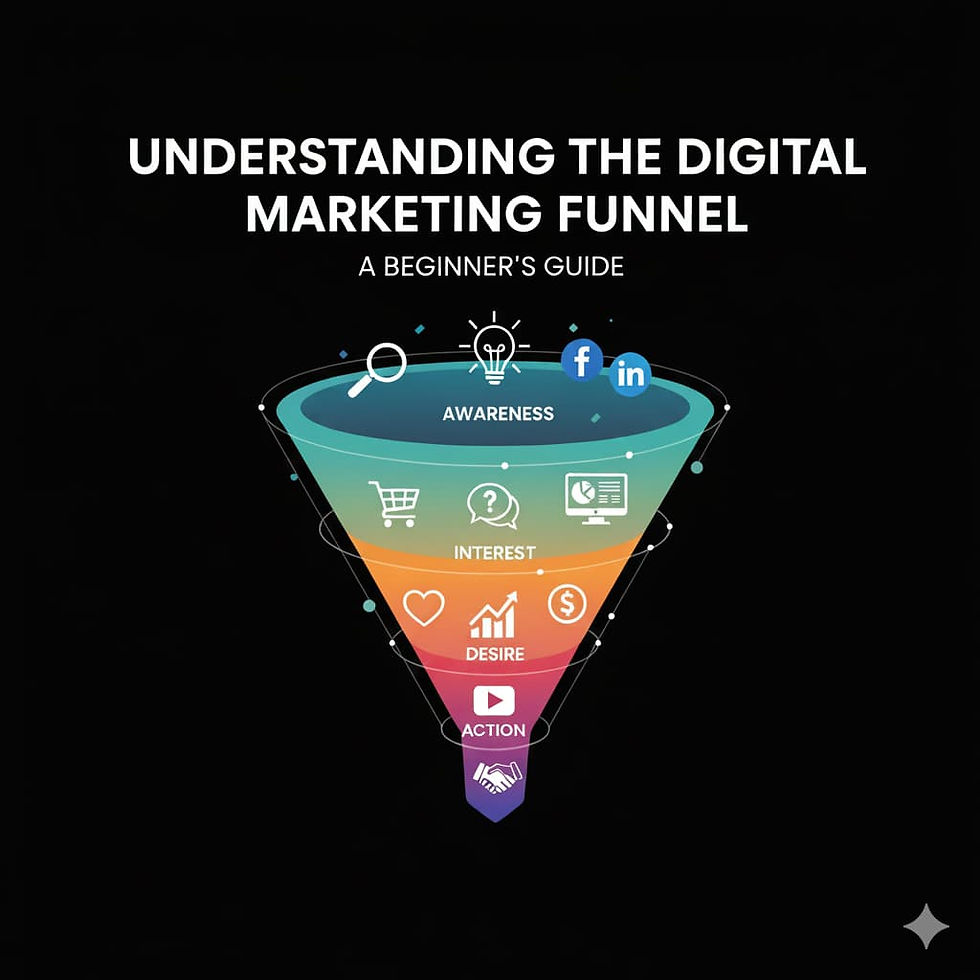
What Is a Digital Marketing Funnel?
A digital marketing funnel is a step-by-step path that shows how a customer interacts with a business online. It starts when someone first hears about your brand and ends when they become a customer or even a repeat buyer.
Think of it like a real funnel. At the top, many people enter. As they move down, the number becomes smaller, but those who remain are more interested and serious about buying. This funnel helps businesses plan the right message at the right time.
Why the Digital Marketing Funnel Is Important
Many beginners make the mistake of trying to sell immediately. But most people are not ready to buy the first time they see a brand. They need time to understand the service, compare options, and trust the business.
The funnel helps businesses guide people slowly and naturally. It also helps avoid wasting money by showing ads to the wrong audience at the wrong time.
Stage 1: Awareness – Let People Know You Exist
The first stage of the funnel is awareness. This is when people discover your business for the first time. They may see your post on social media, find your blog on Google, or hear about you through an online ad.
At this stage, people are not looking to buy. They are only learning. The goal here is not selling but introducing your brand in a helpful and friendly way.
Examples of awareness content include blogs, social media posts, short videos, and informative ads. The content should focus on solving small problems or answering common questions, not promoting offers.
Stage 2: Interest – Building Curiosity and Trust
Once people know about your business, some of them will want to learn more. This is the interest stage. Here, visitors may explore your website, read more blogs, or follow your social media page.
This stage is very important because it builds trust. Your content should explain how your service helps, what makes you different, and why you are reliable. Simple guides, service pages, and educational posts work well here.
This is where the customer journey begins to take shape. Each interaction adds one small layer of trust, moving the person closer to a decision.
Stage 3: Consideration – Helping People Choose You
At this stage, people are serious. They are comparing options, checking reviews, and looking for reasons to choose one business over another. Your role here is to make their decision easier.
Testimonials, case studies, detailed service explanations, pricing clarity, and FAQs are very useful in this stage. People want to feel confident that they are making the right choice.
Clear communication, honest information, and professional presentation matter a lot here. If your website looks confusing or outdated, people may leave even if your service is good.
Stage 4: Conversion – Turning Visitors into Customers
Conversion is when the visitor finally takes action. This could be calling you, filling out a form, booking a service, or making a purchase.
At this stage, your website and marketing should make the process simple. Contact details should be visible, forms should be easy to fill, and response time should be quick.
Even small improvements like clear buttons, simple language, and fast-loading pages can increase conversions.
Stage 5: Loyalty – Keeping Customers Connected
The funnel does not end after a sale. Happy customers can become repeat buyers and even recommend your business to others.
Regular follow-ups, helpful emails, social media engagement, and good customer service help maintain relationships. Loyal customers trust your brand and often cost less to retain than finding new ones.
How the Funnel Helps Small and Local Businesses
For local businesses, the digital marketing funnel is especially useful. It allows you to attract nearby customers, educate them, and guide them gently toward choosing your service.
Instead of pushing ads aggressively, businesses can focus on helping people at each stage. This creates better results and long-term growth.
A well-planned digital marketing strategy ensures that content, ads, and communication match each stage of the funnel. This avoids confusion and improves results over time.
Common Mistakes Beginners Make
Many beginners skip stages and try to sell too early. Others focus only on awareness and forget about conversion. Some businesses post content regularly but do not guide users toward action.
The funnel works best when all stages are connected smoothly. Each step should prepare the user for the next one.
Why Expert Guidance Makes a Difference
Understanding the funnel is one thing, but implementing it correctly takes experience. Content planning, audience targeting, website design, and follow-ups must all work together.
This is why many businesses choose to work with professionals. Creatikartta, a trusted digital marketing agency in Dehradun, helps businesses design complete funnels that attract, engage, and convert the right audience. Their services include SEO, social media marketing, website development, and performance-based campaigns designed for real business growth.
Final Thoughts
The digital marketing funnel is not complicated, but it is powerful. It helps businesses understand how people think and make decisions online. By guiding users step by step, businesses can build trust, increase conversions, and grow steadily.
For beginners, the key is patience. Focus on helping first, selling later, and improving each stage over time. When done correctly, the funnel becomes the backbone of successful digital marketing.


Comments